
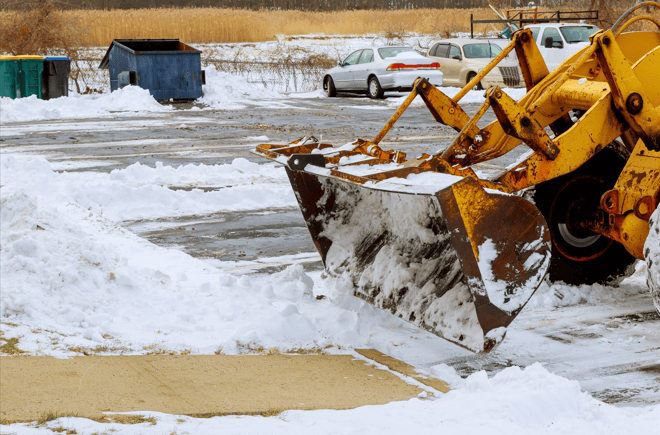
Midwestern winters bring snow, ice, and freezing temperatures that can be tough on both drivers and pavement. For property managers, the challenge is keeping lots safe and accessible without causing unnecessary damage to the asphalt or concrete surface. While snow plowing and de-icing are essential for safety, the wrong methods or materials can shorten the life of your lot and lead to costly repairs. Here is our guide to the best practices for plowing and de-icing so you can protect your pavement while keeping your property safe all season long.
The Risks of Winter Maintenance
Snow and ice are major safety hazards in the winter. Without timely removal, lots become slippery and dangerous for both drivers and pedestrians. Some statistics show that up to 25% of falls and slips in the winter occur in parking lots. However, aggressive plowing or the wrong de-icing chemicals can create long-term problems.
Metal plow blades scraping directly on asphalt can gouge or chip the surface. Overuse of certain salts or chemicals may accelerate deterioration by drawing moisture into the pavement or corroding reinforcement in concrete. These issues add up, leaving your lot looking worn and requiring more frequent maintenance.
The good news is that with the right techniques and materials, you can manage snow and ice without sacrificing pavement health.
Best Practices for Snow Plowing
Plowing is the fastest and most effective way to clear large volumes of snow, but it has to be done carefully.
One of the most important practices is using rubber-tipped or polyurethane blades instead of bare metal. These flexible materials provide effective clearing power while minimizing direct contact with the pavement. Adjusting the plow blade height to avoid scraping sealcoat or striping also helps preserve your lot’s appearance.
It’s also wise to establish clear plowing routes before winter begins. Identifying snow pile locations prevents damage to landscaping and ensures piles don’t block fire lanes or reduce visibility. Rotating pile locations from year to year helps distribute runoff and prevents long-term stress on one section of the pavement.
Choosing the Right De-icers
Not all de-icing products are created equal. While rock salt (sodium chloride) is the most common choice, it isn’t always the best for your pavement. Salt can accelerate freeze-thaw cycles, drawing water into cracks where it expands and worsens damage. It can also harm nearby vegetation and corrode metal surfaces.
Better alternatives include:
- Calcium magnesium acetate (CMA): Less corrosive and safer for both pavement and the environment.
- Calcium chloride: Works effectively at lower temperatures than traditional salt, reducing the amount needed.
- Potassium chloride: Gentler on concrete and landscaping, though less effective at extreme cold.
Property managers should consider both effectiveness and long-term pavement health when choosing a de-icing strategy. In many cases, combining mechanical snow removal with a light application of safer de-icers provides the best balance.
Timing and Application Techniques
When it comes to de-icers, more is not always better. Over-application wastes material, raises costs, and increases damage risk. Applying products early (before ice bonds to the pavement) reduces the amount needed and improves effectiveness. This is often referred to as “anti-icing.”
After plowing, a lighter application of de-icer can prevent refreezing. Spreading materials evenly is key. Clumps or heavy concentrations in one area not only damage the pavement but also create slick spots elsewhere as the chemicals dissolve and spread unevenly.
Coordinating With Pavement Maintenance
Winter maintenance works best when paired with year-round pavement care. Cracks left unfilled before winter allow water and salt to penetrate deeper, accelerating freeze-thaw damage. Sealcoating provides a protective layer that makes asphalt more resistant to both scraping and chemical intrusion.
By combining preventive maintenance in the warmer months with smart plowing and de-icing in the winter, property managers can significantly extend the life of their lots.
Common Mistakes to Avoid
Even with good intentions, property managers sometimes make mistakes that lead to pavement damage. Some of the most common include:
- Allowing plows to scrape too low, removing sealcoat, or damaging striping.
- Relying exclusively on rock salt without considering safer alternatives.
- Failing to rotate snow pile locations leads to concentrated runoff damage.
- Applying too much de-icer causes unnecessary chemical exposure.
Avoiding these mistakes saves both time and money in the long run.
Partnering With Professionals
Winter maintenance requires careful planning and execution. Professional contractors understand how to balance safety needs with pavement preservation. From recommending the right de-icing products to setting plow blade adjustments, experienced teams help property managers avoid costly mistakes.
At Otto’s Parking Marking, we take a proactive approach to winterization. Our team can help prepare your lot with crack filling and sealcoating in advance of the cold season, while also advising on plowing and de-icing strategies that protect your investment.
Winter doesn’t have to be the enemy of your parking lot. With the right plowing practices and smarter de-icing choices, you can keep your lot safe, accessible, and well-maintained throughout the season. By combining preventative maintenance with careful winter care, property managers can reduce damage, lower long-term costs, and preserve a professional image year-round.
Partner with Us Today!
Ready to protect your lot this winter? Otto’s Parking Marking has the expertise to guide you through seasonal maintenance that keeps both your pavement and your visitors safe. Contact us today to learn more about winterization strategies that work.