
Pavement markings are crucial to safety and traffic control in school parking lots. Clear markings help staff manage movement, reduce confusion, and make outdoor areas more functional for everyone. For school administrators and facility managers, the right pavement markings are a simple investment that can deliver long-term benefits. When designed thoughtfully, they improve safety, support accessibility, and even create engaging play spaces that encourage kids to stay active.
Why Pavement Markings Matter on School Campuses
Schools have a unique mix of pedestrians and vehicles. Young students may not always move around the parking lot predictably, and busy traffic patterns at drop-off and dismissal can create hazards. Proper markings create structure and flow, guiding drivers and pedestrians to reduce the chance of unsafe crossings or bottlenecks.
Beyond traffic management, markings also contribute to campus appearance. A well-marked lot and play area signal that a school is organized, proactive, and committed to student safety.
Improving Drop Off and Pick Up Safety
One of the most important areas for school striping is the drop-off and pick-up zone. These spaces often involve multiple lanes, buses, parent vehicles, and staff supervision. Without clear guidance, traffic can become chaotic quickly.
Markings such as directional arrows, stop bars, loading zones, and no parking areas help create order. Clearly marked crosswalks make it easier for students to cross safely, while designated waiting areas help keep foot traffic away from moving vehicles. When these markings are visible and consistent, staff spend less time directing traffic manually and more time focusing on student safety.
Crosswalks and Pedestrian Pathways
Crosswalks are perhaps the most effective tool for improving pedestrian safety. They create predictable walking paths, showing students where to walk and drivers where to stop.
Schools often benefit from crosswalks in areas such as parking lot entrances, building entry points, and bus loading zones. Adding clear stop bars and signage near crosswalks improves visibility and reinforces safe behavior for drivers.
Pedestrian pathways also matter, especially on larger campuses. Marked walking routes and sidewalks help separate students from vehicle traffic and reduce the risk of near misses during busy periods.
Fire Lanes and Emergency Access
School campuses must remain accessible to emergency vehicles at all times. Fire lanes, identified by red paint as per Pavement Marking laws, are critical for ensuring a quick response during emergencies. These areas should be clearly marked, easy to identify, and kept free of obstructions.
Faded fire lane markings can create compliance issues and increase risk during urgent situations. Regular repainting and maintenance help schools stay prepared and avoid unnecessary enforcement problems.
Accessible Parking and ADA Compliance
Accessibility is crucial for school grounds, ensuring all students, parents, staff, and visitors can access the campus, regardless of mobility needs. Proper striping ensures ADA-accessible spaces are compliant, easy to locate, and usable year-round.
Schools should regularly inspect accessible stall markings, access aisles, curb ramps, and signage. When lines fade or layouts become unclear, it can create both safety concerns and compliance risks. Maintaining these markings demonstrates a commitment to inclusion and safe access for everyone on campus.
Playground and Recess Markings That Encourage Activity
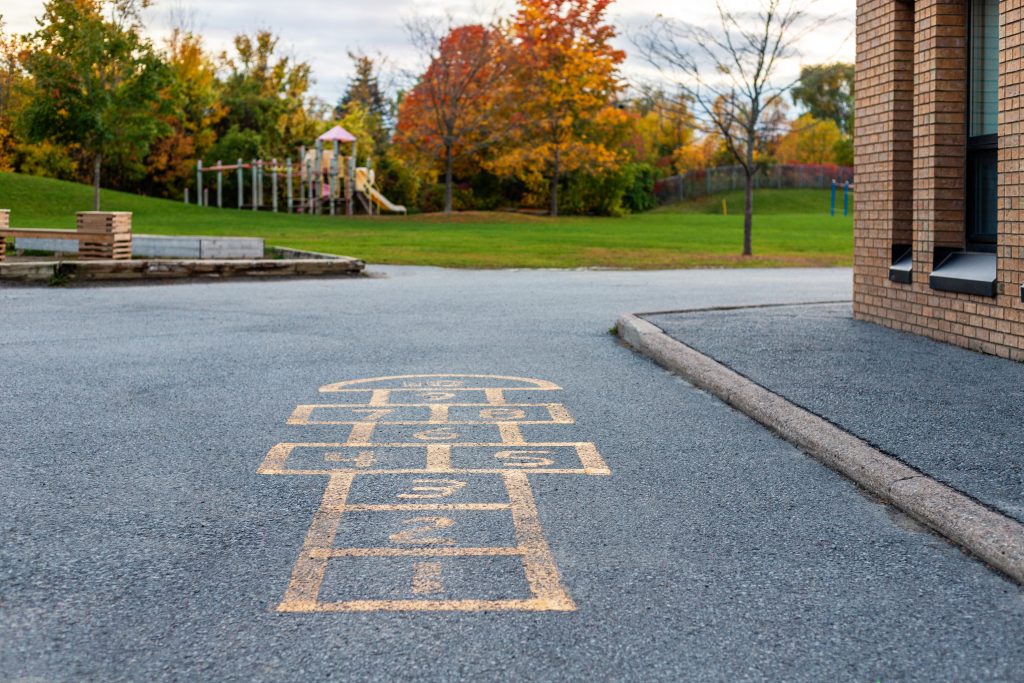
Ona more fun note, pavement markings can also turn open blacktop areas into structured play spaces. Many schools use markings to create games that encourage movement, coordination, and social play.
Popular options include four-square, hopscotch, agility ladders, and game courts for sports such as basketball or pickleball. These designs give students more ways to engage during recess, helping reduce boredom and supporting healthy activity.
Markings can also be used for educational play, such as alphabet games, number grids, or simple learning paths that reinforce classroom concepts outdoors.
Organizing Parking Lots for Staff and Visitors
School parking lots often serve multiple groups, including staff, parents, visitors, and event traffic. Clear stall markings and directional flow reduce congestion and improve safety during peak times.
Schools can also benefit from clearly labeled visitor spaces, staff parking zones, and bus-only areas. These markings reduce confusion and help keep key access points open.
When parking layouts are well organized, schools can manage daily traffic more efficiently and improve the experience for families attending events.
Maintenance Makes Markings More Effective
Even the best layout loses effectiveness if markings fade or wear down. Snow removal, heavy traffic, and seasonal weather conditions can cause striping to deteriorate over time. Regular inspections can help schools determine when restriping needs to happen.
Partnering With Professionals for Better Results
School striping and playground markings require careful planning, accurate measurements, and durable materials. A professional contractor can help schools design layouts that fit their campus needs while meeting safety and compliance standards.
At Otto’s Parking Marking, we work with schools to improve traffic flow, enhance pedestrian safety, and create outdoor play spaces that students enjoy. From crosswalks and fire lanes to playground games and court striping, our team helps schools make the most of their pavement surfaces. Contact our team today to schedule a consultation and create a campus layout that works for your students and staff.