
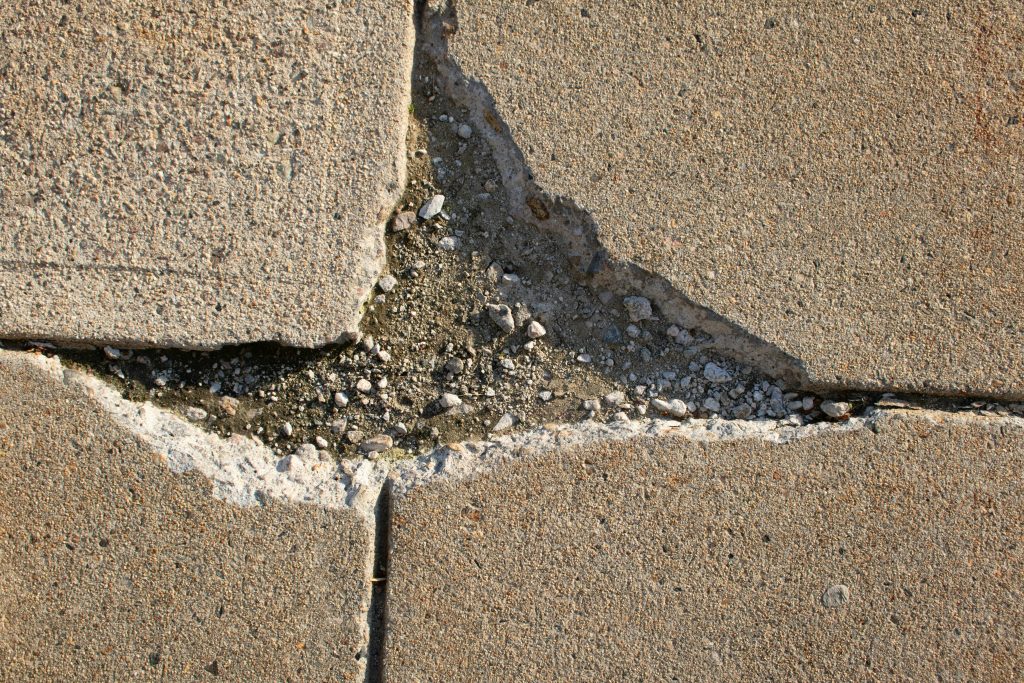
Concrete problems rarely begin as emergencies. A small crack, chipped joint, or rough patch may seem minor at first, but commercial concrete is subject to constant wear from weather, water, salt, and vehicle traffic. Over time, those issues can turn into larger surface failures, trip hazards, drainage problems, or sections that need to be replaced altogether. For property managers, the key is knowing what kind of damage you are looking at and whether it can be repaired before it spreads. This guide explains the most common types of concrete damage, what repair options look like, and when patching is no longer enough.
Why Concrete Fails
The most common cause of concrete deterioration in the Midwest is the freeze-thaw cycle. Water works its way into the concrete, freezes, expands, and fractures the concrete from the inside, and repeated exposure over multiple winters compounds the damage faster than most property managers expect.
De-icing salts accelerate the process significantly. Salt draws more moisture into the concrete while lowering the freezing point of water, which speeds up both freeze-thaw damage and the corrosion of any steel reinforcement embedded below the surface. Add heavy vehicle traffic and the natural aging of the slab, and you have the conditions that produce most of the concrete problems commercial properties deal with year after year.
Common Problems, in Plain Terms
Common concrete problems include the following.
Spalling
Spalling occurs when the surface layer of concrete flakes, chips, or breaks away, leaving a rough, pitted appearance. It can start shallow and cosmetic, but left alone, it exposes the concrete underneath to more moisture and worsens quickly.
Scaling
Scaling is similar to spalling and refers to a thin surface layer peeling off in sheets, often the result of a poor original pour, an overworked surface finish, or early salt exposure.
Cracking
Cracking comes in several forms. Hairline cracks are narrow surface-level fractures that are common as concrete ages and are generally not a structural concern on their own. Structural cracks are wider, deeper, or show movement between the two sides, and they signal that something more serious is happening below the surface.
Joint Failure
Joint failure occurs when the filler material in the control joints between concrete slabs breaks down or pulls away. Control joints are intentional seams cut into concrete to control where cracking occurs. When the filler fails, the exposed slab edges are directly impacted by vehicle traffic and begin to deteriorate.
Settling
Settling and heaving round out the list: settling creates low spots or sunken sections, while heaving pushes slabs upward, often from tree roots or frost pressure, and both create uneven surfaces that become trip hazards.
Repair Options by Problem
The right repair depends on what is wrong, how deep the damage goes, and how much of the surface is affected. Shallow, isolated surface spalling and scaling can often be addressed with patching or resurfacing, provided the surrounding concrete is sound enough to bond to. Hairline cracks are typically handled by routing and sealing, a process that slightly widens the crack to create a reservoir, thoroughly cleans it, and fills it with a flexible sealant to prevent water from getting in.
Structural cracks require a closer look before any repair decision is made, because patching over a crack that is still moving will not hold. Depending on severity, the answer may be a more involved crack repair or partial slab replacement. Joint failure is one of the most cost-effective maintenance items a property manager can stay on top of, because keeping joint filler in good condition protects the slab edges from the kind of impact damage that turns a minor maintenance item into a major repair.
For settling or heaving, the cause matters as much as the symptom, and slab lifting options exist but depend on what is driving the movement. It is worth noting that concrete crack repair is a different process from asphalt crack filling, which uses different materials and methods. If you have asphalt surfaces on the same property, Crack Filling 101 covers what that process looks like and why it matters for your striping investment.
When Patching Isn’t Enough
Patching works when the problem is isolated, the surrounding concrete is sound, and the underlying cause has been addressed. It stops making sense in a few specific situations, and recognizing them early saves money.
Widespread spalling
Widespread spalling is the first signal. When surface deterioration covers a significant portion of the slab rather than isolated spots, patch repairs tend to stand out visually and may not bond reliably to the surrounding material.
Structural cracking
Structural cracking is the second: cracks that are wide, show vertical displacement between the two sides, or continue to grow after repair indicate that something is wrong beneath the surface, and patching them over does not fix the underlying problem.
Repeat damage
The third situation is repeated failure. If the same area keeps coming back after a repair has already been done, the issue is not the repair material. It is an unresolved root cause, whether that is subgrade movement, drainage, or load factors that were never addressed. When a section of concrete is actively shifting, sinking, or heaving relative to adjacent slabs, surface patching will not stop the movement, and that is the clearest sign that replacement of the affected section is the right call.
Why It Matters Beyond Looks
Deteriorated concrete is a liability issue, not just an appearance issue. Spalling, uneven joints, and heaved slabs create trip hazards that put pedestrians at risk, and ADA ramps and accessible routes are held to specific standards. Surface damage that affects slope, texture, or continuity can result in real consequences.
There is also the matter of protecting the surrounding pavement. Water that infiltrates a failing concrete apron or dock does not stay contained. It moves into the subbase, and subbase damage is expensive regardless of whether the surface above it is concrete or asphalt. Addressing concrete deterioration while it is still a surface problem is almost always less expensive than addressing it after it has become a subgrade problem.
What to Expect from an Assessment
A concrete assessment is straightforward. A contractor walks the surface, identifies the type and extent of damage, and checks whether the surrounding concrete is sound enough to bond to. For cracks, that means looking at width, depth, and whether there is any movement between the two sides. For spalling, it means determining how deep the damage goes and how much of the surface is affected. The outcome of a good assessment is a clear recommendation: repair this, monitor that, replace the other.
Contact Us Today!
Otto’s Parking Marking serves commercial properties throughout the greater Indianapolis area and can walk your site and give you a straight answer on what your concrete actually needs. Reach out online to request a quote!
Frequently Asked Questions
Should I repair or replace spalling concrete?
It depends on how deep the damage goes and how much of the surface is affected. Shallow, isolated spalling can often be patched or resurfaced successfully. Widespread spalling, or spalling that has exposed reinforcing steel, typically points toward replacement of the affected sections.
How long do concrete repairs last?
A well-done patch or resurfacing job on sound underlying concrete can last many years, but the lifespan depends heavily on the quality of the repair, the condition of the surrounding slab, and whether the root cause of the damage was addressed. Repairs done over concrete that is still moving or over a compromised subbase tend not to hold.
Why should I seal concrete joints?
Control joints are the intentional seams built into concrete slabs to manage where cracking occurs. When the filler in those joints breaks down, the exposed slab edges are subjected to direct impact from vehicle traffic and begin to chip and deteriorate. Keeping joints sealed is routine maintenance that protects the slab edges and prevents a small upkeep item from becoming a larger repair.
Is it cheaper to repair or replace concrete?
Repair is almost always less expensive than replacement when the damage is caught early, and the surrounding concrete is sound. The calculation shifts when damage is widespread, the subbase has been compromised, or previous repairs have already failed. A site assessment is the only reliable way to know which side of that line you are on.
How can I tell if a crack is serious?
Width, depth, and movement are the three things that matter. Hairline cracks that are stable and not growing are generally a maintenance concern rather than a structural one. Cracks that are wide enough to fit a quarter into, show one side sitting higher than the other, or continue to grow after being filled, warrant a closer look from a contractor.