Site protection sounds simple. Block cars from hitting buildings, pedestrians, or critical equipment. The product list is short: bollards, parking bumpers, and wheel stops. The decision between them, though, has more to it than most property managers realize. The wrong choice does not stop a runaway car, fails inspection, or just looks out of place on a commercial property. The right choice protects what you care about, fits the site, and meets the codes that apply. Here is how to think through site protection.
What Each Product Is Built to Do
The three products solve different problems. Picking the right one starts with understanding what each is actually designed for.
Bollards
Bollards are vertical posts mounted to the ground. They stop or deflect vehicles before the vehicle reaches what is behind them. You will see them in front of building entrances, storefronts, gas pumps, utility meters, and bike racks. They come in a wide range of styles, from decorative posts to security bollards engineered for high-speed vehicle impact.
Parking bumpers and wheel stops
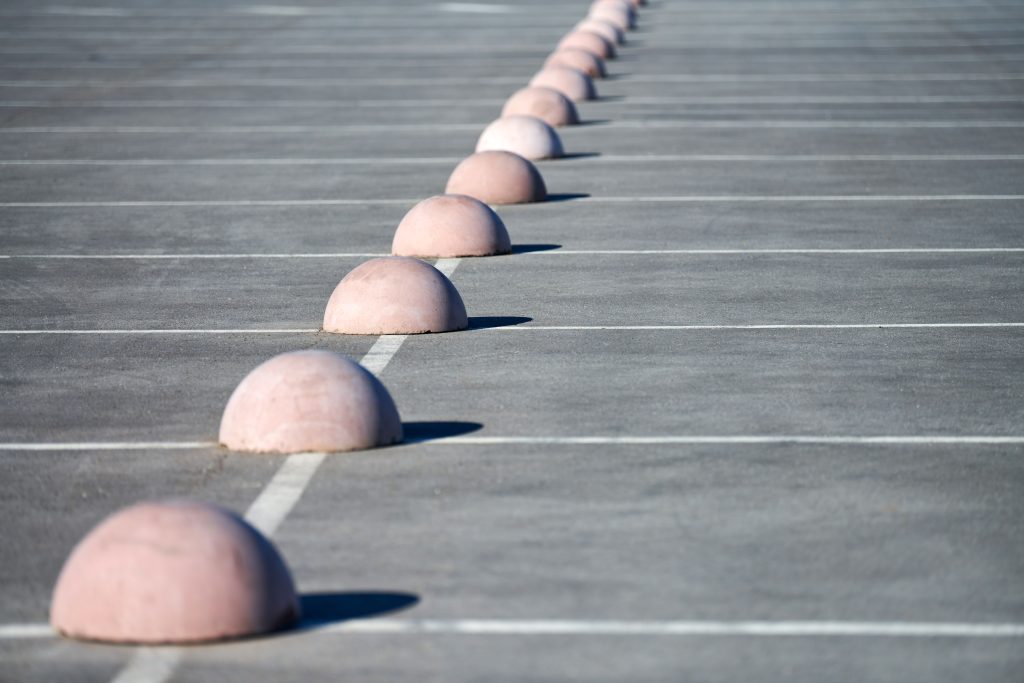
Parking bumpers, sometimes called wheel stops or car stops, are low barriers placed at the head of a parking space. They stop a car at the right point in the stall so the vehicle does not overhang the sidewalk, hit the building, or block the next row. They are typically six feet long and made of concrete or recycled rubber.
When to Use Each One
Bollards belong wherever a vehicle could cause real damage. Common placements include:
- Building entrances and storefronts
- Gas pumps and fuel islands
- Outdoor seating areas
- Utility meters, transformers, and HVAC equipment
- Pedestrian walkways near drive lanes
- ATMs and drive-thru lanes
Parking bumpers and wheel stops belong inside parking stalls themselves. Use them when:
- Cars are parking nose-in toward a curb or sidewalk
- A sidewalk runs across the front of the parking row
- Vehicles need a consistent stopping point so a row stays neat
- A backup event could damage landscaping, signs, or building corners
A bollard is not a suitable parking bumper. A parking bumper does not stop a moving car. Matching the product to the situation is the whole game. For more on the difference between these and traffic-calming products like speed bumps, see our article on speed bumps, wheel stops, and bollards.
Choosing the Right Product
Three questions help narrow the choice.
What needs to be protected?
A storefront window, a pedestrian zone, or an outdoor seating area calls for bollards. A row of parking spaces near a curb or building wall calls for parking bumpers. A loading area with both pedestrian foot traffic and heavy vehicle movement may need a mix of both.
How fast could the vehicle be moving?
Bumpers are designed for parking speed. They will not stop a car coming in at 15 or 20 miles per hour. If there is any chance of speed, the answer is a bollard, and you may need to decide between a standard and a crash-rated one.
What does the site look like?
Some properties have aesthetic guidelines, especially in retail and hospitality. Decorative bollards keep the look consistent. Industrial sites usually prioritize visibility and durability over appearance.
Materials and Installation
Concrete is the most common material for parking bumpers and works well in most commercial lots. Recycled rubber bumpers are lighter, easier to install, and gentler on tires in cold-weather sites where freeze-thaw cycles can damage concrete.
Bollards are typically steel posts filled with concrete, then sleeved or painted depending on the look. Crash-rated bollards have specific engineering requirements and certified installation depths.
Whichever product you choose, anchoring matters. A loose bumper drifts. A poorly installed bollard fails on impact. Either condition is a liability problem. Have a professional handle the install.
Get a Site Walk-Through
Otto’s Parking Marking can walk your property, identify the protection points that matter, and recommend the right mix of bollards, bumpers, and wheel stops. Call 317.882.8933 or 800.888.7996, or request a quote to get started.