
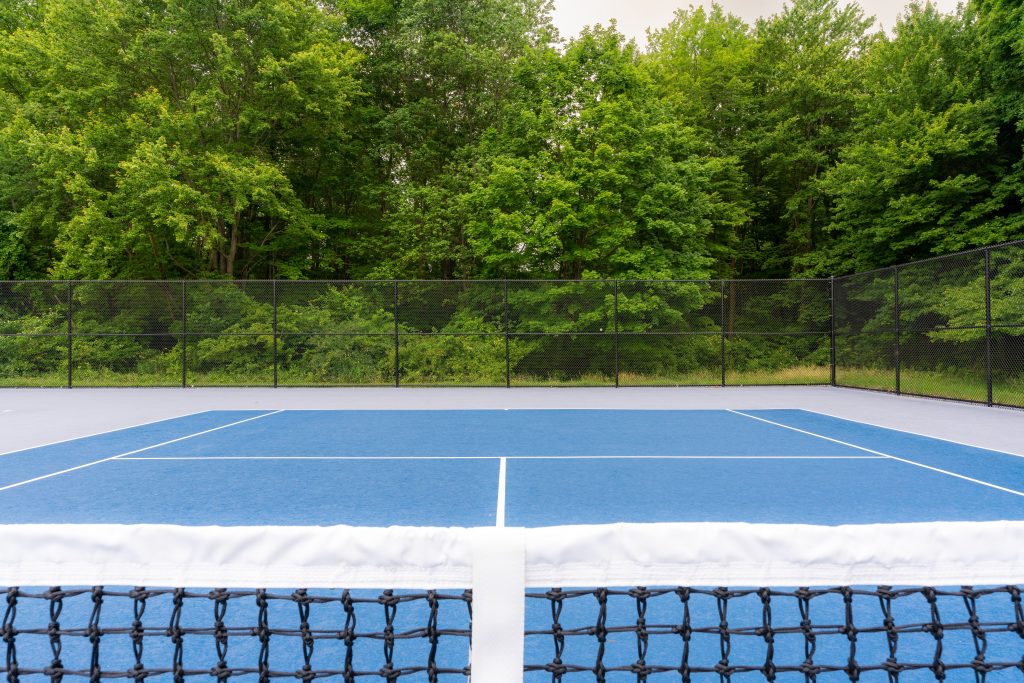
Pickleball continues to grow in popularity, and more property owners are looking to add courts wherever they have space. From private backyards to parks, schools, and athletic facilities, the demand for new pickleball courts is higher than ever. However, not all court laynots need to be treated the same. A backyard pickleball court has different priorities than a commercial facility, and choosing the right design and materials from the beginning can prevent costly changes later. The best court layouts balance accurate measurements, player safety, and long-term durability while fitting the needs of the space.
The Basics of Pickleball Court Dimensions
A regulation pickleball court measures 20 feet wide by 44 feet long, according to the USA Pickleball Organization. This includes the full playing area, with baselines, sidelines, service courts, and the non-volley zone near the net.
Line width is also important. Standard pickleball lines are two inches wide and should contrast clearly with the court surface color. For example, if the court is dark green, white lines provide excellent visibility for players.
While these measurements are consistent, the total space needed for a usable court depends on how the court will be used. That is where backyard and commercial layouts start to differ.
Backyard Courts: Flexible, Space Conscious Planning
Backyard courts are often built in spaces that were not originally designed for sports. Homeowners may be working around fences, landscaping, patios, pools, or existing concrete pads. Because of these limitations, backyard courts often require more creative planning.
In a residential setting, the goal is usually to create a court that is enjoyable and functional without requiring a full-scale sports complex footprint. Some homeowners choose a regulation-size court but reduce the runoff space. Others may adjust the layout to fit a narrower area, especially if the court is intended for casual play rather than competitive use.
However, it is important to understand that tighter spaces can affect safety and playability. Players need room to move beyond the baseline and sidelines, especially as skill levels improve. A layout that feels fine for beginner play may feel cramped once players start moving faster and hitting deeper shots.
Backyard courts also need to take into account nearby structures. A court placed too close to a garage, fence, or landscaping feature can increase the chance of collisions or create frustration when balls constantly roll into obstacles.
Commercial Courts: Consistency and Player Experience
Commercial pickleball facilities, parks, and community courts are designed for heavier use and a wider range of players. These courts are typically expected to meet regulation dimensions and provide adequate space around the playing area.
In a commercial environment, run-of-the-house space matters. Players need room to chase shots safely, and additional space improves the overall experience. It also allows multiple courts to be placed side by side with clear separation, reducing interference between games.
Commercial layouts also require long-term durability. High traffic means more wear on both surfaces and markings. The court design should support consistent play, good drainage, and clear visibility throughout the day.
Many commercial facilities also plan for future growth. A space that begins with two courts may later expand to four or six, depending on the community’s needs. Planning layouts with expansion in mind helps avoid rework and makes future additions more efficient.
Surface Types and How They Affect Layout
Backyard courts may be installed on existing concrete, asphalt, or newly poured slabs. Some homeowners choose sport tile systems, while others use coated surfaces designed for outdoor play. Alternatively, commercial courts often use asphalt or concrete with a sport coating system for improved performance and comfort. These surfaces are designed to handle weather exposure and provide better traction.
The surface type influences layout decisions because it impacts drainage, durability, and how well lines hold up.
Single-Use Courts vs. Multi-Use Layouts
One of the biggest layout decisions involves whether the court will be dedicated to pickleball or shared with other sports. Backyard courts are often multi-use, allowing families to play lots of racquet-based sports on the same court. Multi-use courts are also common in smaller parks or school grounds to increase affordability. Color selection becomes especially important in multi-use layouts. Using distinct line colors for each sport helps players understand boundaries and reduces disputes during play.
Commercial facilities often use dedicated courts to improve clarity and the player experience. These courts exclusively have lines for pickleball.
Lighting, Orientation, and Sun Considerations
Court orientation affects play more than many people expect. In backyard settings, homeowners may not have the flexibility to choose ideal orientation, but it is still worth considering. Playing directly into the sun can make it harder to track the ball, especially in the morning or evening.
Commercial facilities often plan court orientation to reduce glare and improve visibility. Lighting may also be added for evening play. When courts are used after dark, line visibility and consistent lighting become even more important for safety.
Common Layout Mistakes to Avoid
Pickleball courts may look simple, but small errors can cause big problems. One common mistake is incorrect measurements, which affects gameplay and can create long-term frustration for players. This can be challenging to correct if the wrong-size concrete slab is laid for the court, so be sure to double-check measurements as you go along.
Another issue is insufficient spacing between courts or between the court and surrounding obstacles. This increases the risk of collisions and makes the facility feel crowded.
Poor line contrast is also a frequent problem. Lines that blend into the surface reduce visibility, leading to missed calls and confusion. For example, if your court is light blue, choosing a light green line may be confusing. White lines are a pretty safe choice across the board.
Finally, some courts are stripped before the surface is properly prepared. If the surface is dirty, uneven, or not fully cured, lines may peel or fade quickly.
Why Professional Striping Makes a Difference
Pickleball court layouts are not one-size-fits-all. Backyard courts often require flexibility and creative planning, while commercial facilities focus on consistency, durability, and player experience. In both settings, accurate measurements, good spacing, and clear line visibility are essential for safety and enjoyment.
Whether the court is in a backyard or a commercial facility, accurate striping is essential. Professional contractors ensure regulatory measurements, straight lines, and consistent spacing. They also help property owners choose color combinations that improve visibility and fit the space.
At Otto’s Parking Marking, we help homeowners, schools, parks, and commercial facilities create pickleball courts that look great and play well. From planning the layout to applying durable markings, our team delivers results that support long-term performance. Contact our team today to schedule a consultation and bring your pickleball project to life.