
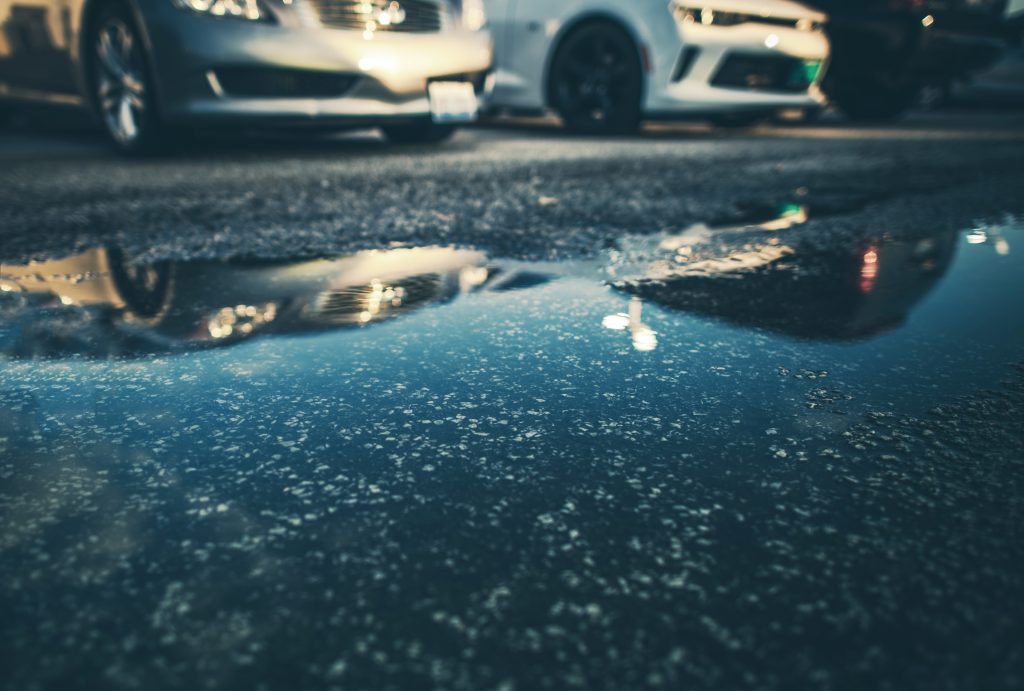
Water is one of the most destructive forces a parking lot faces. While cracks, potholes, and faded markings may be the visible problems, water is often the root cause behind them. When drainage, slope, or surface conditions are not properly managed, moisture can quickly undermine both asphalt and concrete, leading to costly repairs and safety concerns. Understanding how water interacts with your parking lot and how to control it is essential for long-term performance. With the right design and maintenance approach, property owners can significantly reduce water damage and extend the life of their pavement.
Why Water Is So Damaging to Pavement
Water may seem harmless, but once it penetrates a parking lot surface, it starts to deteriorate the structure from the inside out. Moisture seeps into cracks, joints, and porous areas, reaching the base layers beneath the pavement. Over time, this softens the foundation and reduces its ability to support traffic loads. This means water damage may not be visible for a long time, but it is slowly eroding the asphalt’s stability.
In colder climates, water damage is intensified by freeze-thaw cycles. When trapped moisture freezes, it expands, forcing cracks to widen and surfaces to break apart. Even in warmer regions, standing water accelerates surface wear and encourages erosion beneath the pavement.
The Role of Proper Drainage
Effective drainage is the first line of defense against water damage. A well-designed parking lot directs water away from the surface quickly, preventing pooling and infiltration. Without proper drainage, even a new lot can deteriorate rapidly.
Drainage systems may include catch basins, trench drains, swales, or underground piping, depending on the property layout. These components must be kept clear of debris to function properly. Clogged drains are one of the most common causes of standing water, especially after heavy rainfall.
Routine inspections help identify drainage issues early. If water is consistently pooling in the same areas, it may indicate a blockage or a design flaw that needs attention.
Why Slopes and Grading Matter
Slope is a critical, but often overlooked, element of parking lot performance. Pavement should be graded so that water naturally flows toward designated drainage points. Even small grading errors can cause water to settle in low spots, creating chronic moisture problems.
Over time, heavy traffic and settling can alter a lot of the lot’s original slope. Areas that once drained properly may begin to hold water, increasing surface wear and safety risks. Regrading or surface corrections may be necessary to restore proper water flow and boost parking lot safety.
Surface Wear and Water Infiltration
As pavement surfaces age, they become more vulnerable to water. In asphalt lots, oxidation causes the surface to dry out and crack, allowing moisture to penetrate more easily. In concrete lots, worn joints and surface scaling create pathways for water to enter.
Preventive maintenance plays a major role in limiting water infiltration. Crack filling seals openings before they expand. Sealcoating creates a protective barrier that slows moisture penetration and shields asphalt from further deterioration. Joint sealing in concrete lots helps prevent water from reaching the subbase. Without these measures, water-related damage accelerates, leading to potholes, heaving, and structural failures.
How Standing Water Affects Safety and Liability
Beyond structural damage, standing water creates immediate safety concerns. Pooled water can hide surface defects, increasing the risk of trips, falls, or vehicle damage. In colder months, these areas are more likely to freeze, forming dangerous ice patches.
From a liability standpoint, recurring water issues may signal neglected maintenance. If an injury occurs in an area known for pooling or poor drainage, property owners may face increased risk. Addressing water issues proactively demonstrates a commitment to safety and reduces exposure to claims.
Preventative Strategies That Make a Difference
Preventing water damage requires a combination of good design and ongoing maintenance. Some of the most effective strategies include:
- Conducting regular inspections after heavy rain to identify pooling areas
- Keeping drains and catch basins clear of debris
- Sealing cracks and joints before water can penetrate
- Applying sealcoating to protect asphalt surfaces
- Correcting low spots or slope issues as they develop
These steps work together to manage water and protect the pavement beneath it.
Coordinating Drainage and Striping
Drainage and striping are often treated as separate concerns, but they are closely connected. Poor drainage can shorten the life of pavement markings, causing paint to fade or peel prematurely. Standing water also makes lines harder to see, reducing their effectiveness.
When drainage issues are addressed first, restriping becomes more effective and longer-lasting. Clear markings on a dry, stable surface improve traffic flow and reduce confusion, especially during storms or low-visibility conditions.
Partnering With Experienced Professionals
Water management in parking lots requires an understanding of pavement behavior, drainage design, and maintenance timing. Some asphalt mixtures are more prone to water damage than others, so working with an experienced contractor can help you identify problem areas and recommend solutions that can repair and prevent further damage.
At Otto’s Parking Marking, we help property owners take a proactive approach to pavement care. From crack filling and sealcoating to evaluating surface wear that affects drainage, our team focuses on long-term performance and safety. Contact our team today to schedule a consultation and keep water damage from taking over your lot.