Slip, trip, and fall incidents account for over 30% of preventable injuries in the US. If these injuries occur on commercial properties, particularly in parking lots, they often lead to hefty liability claims. Uneven pavement, unclear pedestrian routes, poor visibility, and missing signage can all contribute to accidents that lead to injuries, complaints, and costly claims. Clear striping and well-placed signage can make all the difference for safety in parking lots. When parking areas are organized and hazards are clearly communicated, visitors are less likely to take unsafe paths or make sudden movements that lead to accidents.
Why Slip, Trip, and Fall Claims Happen Outdoors
Parking lots and exterior areas pose unique challenges for slips, trips, and falls. People are often distracted, carrying items, watching for vehicles, or moving quickly toward a building entrance. At the same time, pavement surfaces are exposed to weather and wear that can create hazards such as potholes, uneven sidewalks, and ice buildup. This combination of factors makes this kind of incident extremely common.
How Striping Improves Pedestrian Safety
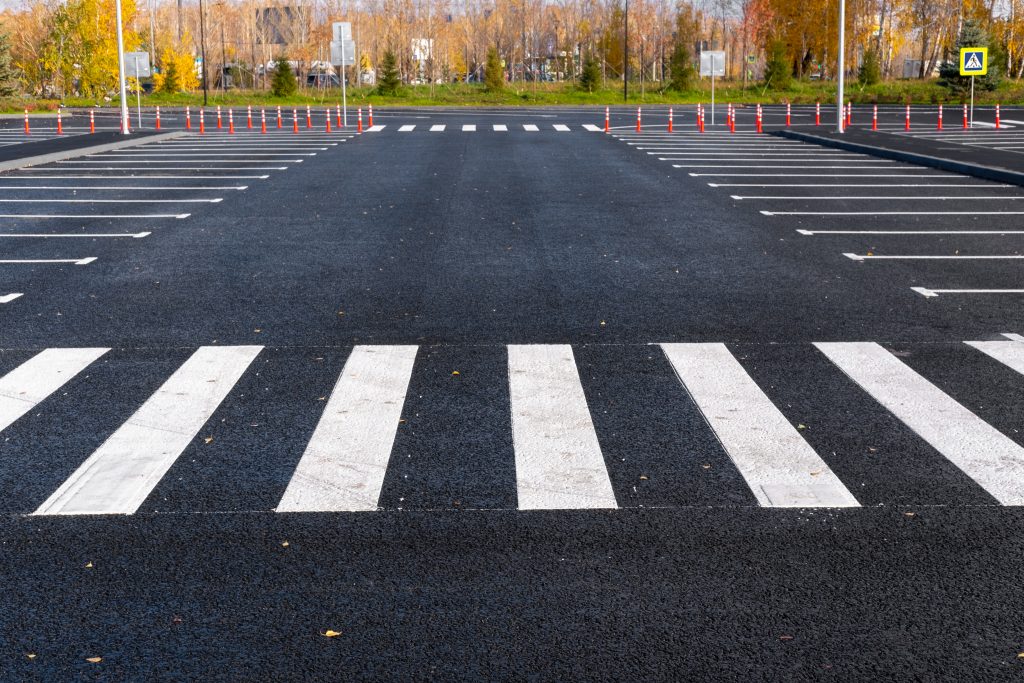
Parking lot striping is often thought of as a tool for organizing vehicles, but it also plays a major role in pedestrian safety. Crosswalks, stop bars, and directional arrows help create predictable movement patterns. When drivers know where to stop, and pedestrians know where to cross, interactions are safer and more controlled.
Clear crosswalk striping near building entrances, accessible parking spaces, and high traffic zones reduces confusion. It also encourages pedestrians to use designated routes rather than taking shortcuts through traffic lanes or uneven pavement areas.
Striping can also define pedestrian-only zones, loading areas, and no parking zones. These markings help keep walkways clear and reduce obstacles that can create trip hazards.
The Role of Signage in Preventing Accidents
Even the best pavement markings can lose effectiveness without proper traffic signage. Signs reinforce pavement markings and put the traffic rules in drivers’ lines of sight. In many cases, signage is the difference between an organized property and one that feels confusing or unsafe.
Signs such as stop signs, pedestrian crossing signs, and directional arrows improve traffic flow and reduce sudden stops or unexpected turns. Speed limit signs and speed bump warnings help control vehicle behavior, which reduces the risk of vehicle-pedestrian incidents that can lead to falls or injuries.
Signage is also important for hazard communication. Wet surface warnings, uneven pavement notices, and temporary construction signs help alert visitors to risks before they step into a dangerous area.
How Accessibility Markings Reduce Risk
Accessible parking spaces and walkways require clear striping and signage to remain safe and compliant. When these markings fade, visitors may park incorrectly, block access aisles, or force pedestrians with mobility challenges to navigate unsafe routes.
Properly marked access aisles, curb ramps, and designated pathways help prevent trips and falls, especially for individuals using wheelchairs, walkers, or canes. Maintaining these markings is not only a compliance issue. It is a safety priority that reduces the chance of preventable incidents.
Common Striping and Signage Mistakes
Property owners often have good intentions but overlook details that reduce effectiveness. Some common issues include faded crosswalks, missing stop bars, unclear directional markings, and inconsistent signage placement. These issues can cause confusion for drivers and pedestrians alike.
Another frequent problem is placing signs where they are difficult to see. A sign blocked by a tree or positioned too far from the area it applies to can cause confusion rather than clarity. Similarly, striping that is applied without proper surface preparation may fade quickly, requiring frequent repainting.
When markings and signs are inconsistent or hard to read, visitors are more likely to make unpredictable decisions. That unpredictability increases the risk of slip, trip, and fall incidents.
The Connection Between Maintenance and Liability
Slip, trip, and fall claims are not always caused by a single hazard. Often, they happen because multiple factors combine. A cracked surface, poor lighting plus unclear pedestrian guidance create the perfect environment for an accident.
Routine maintenance reduces these risks. Crack filling, pothole repairs, and sealcoating help keep surfaces even and stable. Restriping ensures pedestrian routes remain visible. Updating signage keeps instructions clear and current.
These steps also demonstrate proactive care. If an incident occurs, documented maintenance efforts show that the property owner took reasonable steps to keep the area safe. That can make a meaningful difference in how claims are handled.
Partnering With Experienced Professionals
Slip, trip, and fall claims are costly and disruptive, but many of the risks that cause them can be reduced with clear striping and signage. Well-marked crosswalks, visible directional guidance, and properly placed signs help visitors move safely and predictably through parking areas.
Effective striping and signage require more than paint and posts. Layout planning, compliance awareness, and durable materials all play a role. Professional contractors understand how to create clear traffic patterns, improve pedestrian safety, and keep markings consistent across the property.
At Otto’s Parking Marking, we help property owners reduce risk through professional striping, safety markings, and signage solutions. Our team focuses on clear layouts, durable results, and long-term performance so your property stays safer and easier to navigate. Contact our team today to schedule service and keep your property looking professional and protected.